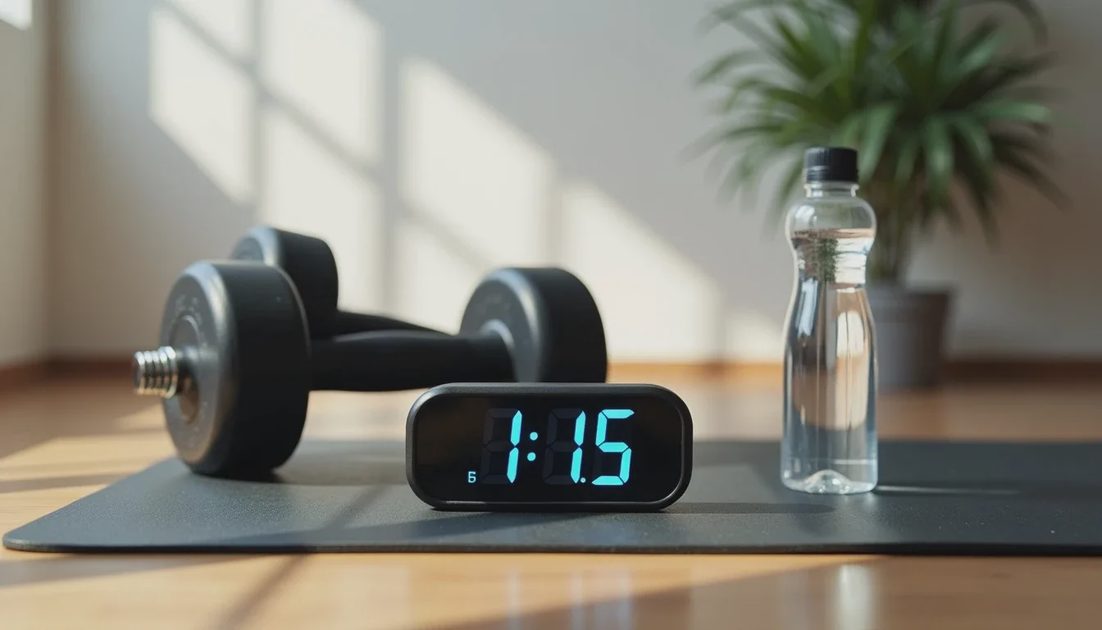
Fifteen minutes is not ideal. It is also not nothing.
Busy adults lose more training months to canceled sessions than to short sessions. When the calendar collapses, the useful skill is knowing exactly what to do with a small window so the habit survives. This article gives you a clear 15-minute template, what to prioritize, and what to stop negotiating.
The Short Version
Skip the elaborate warm-up. Train one squat or hinge, one push, one pull, and a brief core or carry. Use continuous work with short rests. Stop on time. Count it as a completed session. Progress later when you have 30 minutes again.
Safety note: Move within a comfortable range and use loads you can control. If pain or medical issues are present, get appropriate professional guidance.
Why Short Sessions Matter
A 15-minute workout will not maximize every fitness quality at once. That is not its job. Its job is to:
Keep the identity of someone who trains
Provide a minimum effective stimulus
Prevent the all-or-nothing spiral after a busy day
Over a year, the person who completes many short sessions usually passes the person who waits for perfect conditions.
The 15-Minute Template
Minutes 0–2: Quick start
March in place, two easy hinge patterns, ten arm circles. No long mobility flow.
Minutes 2–13: Main work
Rotate through:
Squat or hinge — sit-to-stand, goblet squat, or bridge
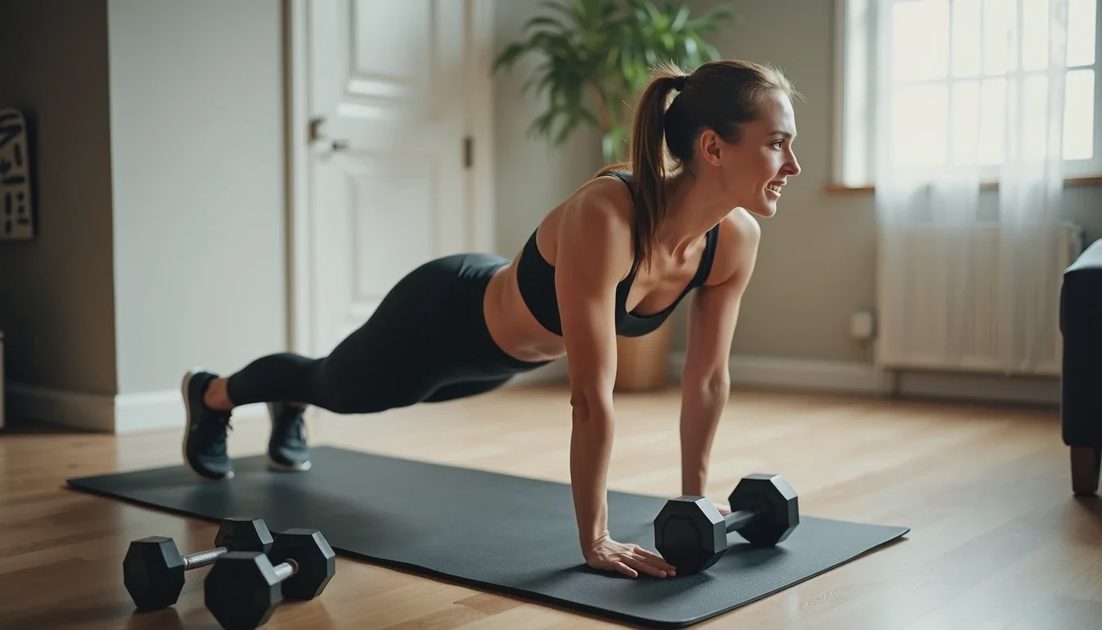
Push — elevated push-up or dumbbell floor press
Pull — band row or single-arm dumbbell row
Core or carry — short dead bug, plank, or suitcase carry
Use 2–3 rounds. Keep rests short—20–40 seconds—unless form is slipping.
Minutes 13–15: Close
Easy walking and two slow breaths. Put equipment away so tomorrow is easier.
Load and Rep Guidance
Choose a load you could complete with solid form for the whole window. This is not a day for maximal attempts. Controlled reps matter more than impressive numbers. If you only have bodyweight, adjust angles (higher push-up surface, slower tempo) to keep the work challenging.
What to Cut Without Guilt
When time is limited, cut:
Extended foam rolling
Isolation “extras”
Long rest periods
Phone checking between sets
Do not cut the major patterns. A session of only core work or only walking is better than nothing, but the template above preserves more strength qualities in the same window.
Minimum-Minimum Version
If 15 minutes becomes 8:
2 sets of a squat pattern
2 sets of a push
2 sets of a pull
Then stop. The point is completion, not heroics.
How to Schedule the 15-Minute Option
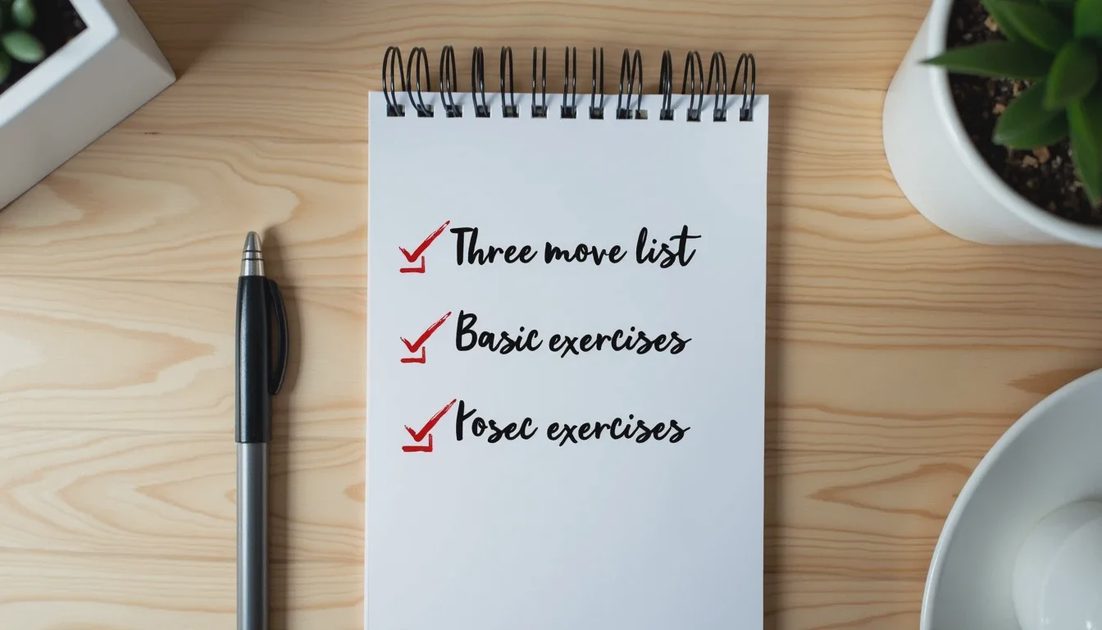
Decide in advance what triggers the short session: late meeting, kid activity, low energy after poor sleep. If you wait until the moment to invent a plan, the window disappears. Write the template on a card or phone note so negotiation dies quickly.
What Progress Looks Like on Short Days
Progress may be:
Cleaner form under time pressure
Slightly higher load with the same control
Faster setup because the routine is automatic
More consecutive weeks without a full zero
Those are real gains. They just do not look like a transformation photo.
Final Thought
Fifteen minutes is enough to keep strength training alive during the weeks when life is loud. Use a fixed template, train the big patterns, stop on time, and count it. The best plan is the one you can repeat—including on the days when the plan has to shrink.
Train for the life you actually live. When you only have 15 minutes, use them.