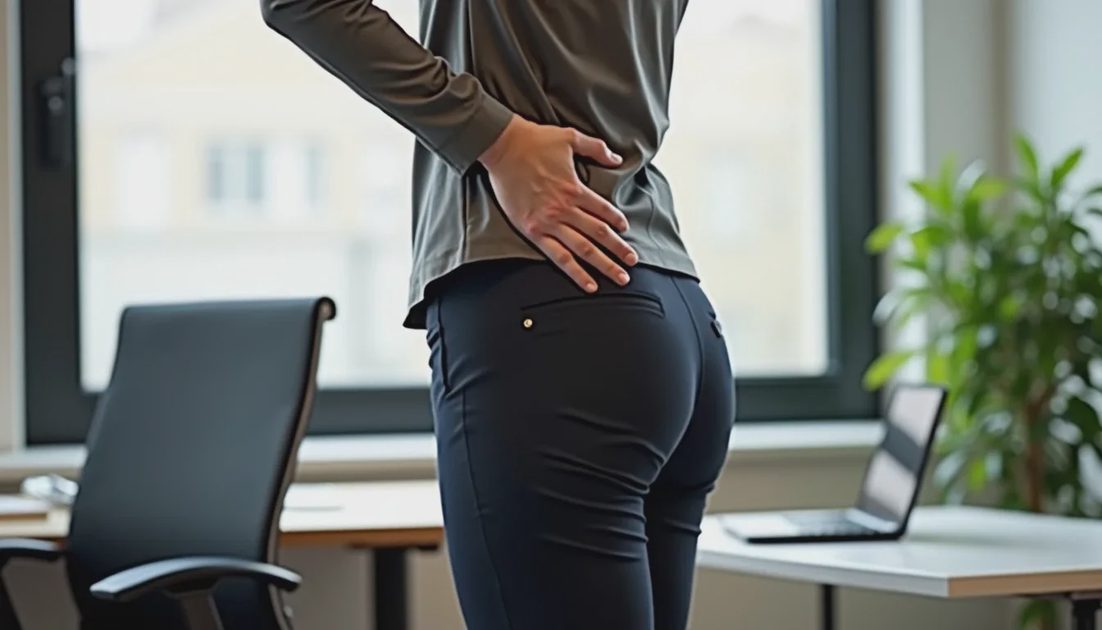
If you sit for most of the workday, tight hips can feel inevitable. The front of the hips aches when you stand. Deep squats feel restricted. You stretch for a minute, feel better for ten, and return to the same stiffness by the next afternoon.
The common response is more stretching. Sometimes that helps a little. Often it does not solve the problem because the problem is not only short muscles. It is also underused muscles, long static positions, and a nervous system that has adapted to sitting as the default.
The Short Version
Long sitting keeps the hips in a flexed position, reduces glute contribution, and leaves the body less practiced at opening and loading the hips through a full range. Relief comes from frequent position changes, basic glute and posterior-chain strength, and mobility work you actually repeat—not from occasional aggressive stretching alone.
Safety note: Sharp pain, radiating symptoms, or medical conditions need professional evaluation. This is general education, not diagnosis.
What “Tight” Often Means
People use “tight” to describe several different sensations:
A stretchy restriction at the front of the hip
Stiffness when standing after long sits
Discomfort in the deep hip or outer hip
A sense that squatting or lunging is blocked
Those sensations can come from shortened tissue tolerance, low strength in the muscles that should support the hips, irritated structures, or simply a lack of recent movement through the range. Treating every sensation as a flexibility problem leads to a lot of time on the floor and not much lasting change.
Why Sitting Sets You Up for This
In a seated position, the hips stay flexed for long blocks. The muscles at the front of the hips spend a lot of time in a shortened position, while the glutes spend a lot of time under-stimulated. When you finally stand or train, the system has had hours of practice at one posture and very little practice at the opposite actions.
Add low daily step counts and infrequent strength work, and the hips feel “tight” not only because of tissue length, but because the body is not strong or coordinated through the ranges you are asking for after work.
What Helps More Than Endless Stretching
1. Change positions more often
Standing breaks, short walks between meetings, and alternating sitting options reduce continuous flexion time. Frequency matters more than a single heroic stretch at 6 p.m.
2. Strengthen what is quiet
Glute bridges, hip hinges, sit-to-stands, and easy lateral steps give the posterior chain a reason to engage. Strength improves tolerance and control, which often changes how “tight” feels in daily movement.
3. Use mobility as practice, not punishment
Gentle hip flexor openers, 90/90 transitions, and controlled deep-knee bend progressions work better when they are moderate and regular. Forcing extreme ranges into sharp discomfort is not a badge of honor.
4. Train the patterns you care about
If you want to squat more comfortably, practice squat patterns with a depth you can control. Capacity is specific. Stretching alone does not automatically transfer to loaded positions.
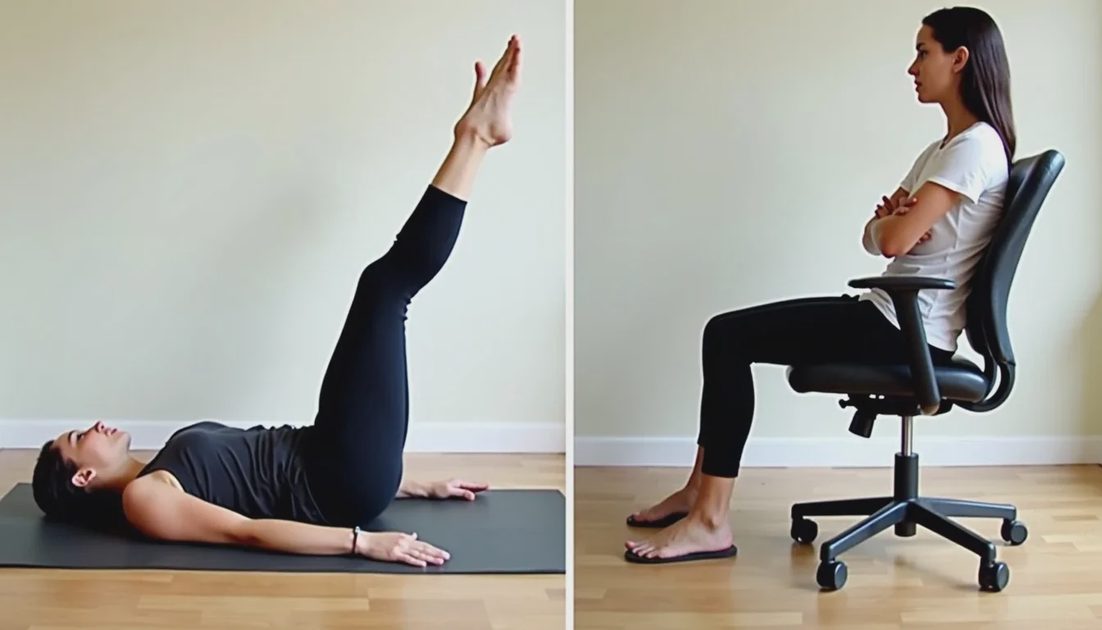
A Simple Daily Anti-Stiffness Routine (6–8 Minutes)
60 seconds walking or marching
45 seconds each side gentle hip flexor opener
10–12 glute bridges
8–10 sit-to-stands from a chair
5 slow thoracic rotations each side
Do this once or twice during the workday if possible, and once after long sitting blocks. Keep it easy enough that you will actually finish it.
What to Stop Doing If It Is Not Helping
Stretching only when pain is already high
Comparing your hip mobility to online mobility specialists
Adding five new drills every week instead of repeating two
Ignoring strength while chasing flexibility content
If a specific movement consistently increases pain, stop and get appropriate professional input.
When to Get Help
See a qualified clinician if you have sharp or radiating pain, numbness, unexplained weakness, or symptoms that worsen despite conservative movement changes. Persistent problems deserve assessment rather than endless self-experimentation.
Final Thought
Hips that feel tight after sitting are often asking for more than a longer stretch. They are asking for position changes, basic strength, and regular practice through comfortable ranges. Treat stiffness as a signal to move and strengthen, not only as a sentence to stretch harder.
Train for the life you actually live. Break up the sitting, then build the strength that makes standing and training feel better.